At the moment of touchdown the wheel is stationary and, within a fraction of a second, must reach ground speed. While it accelerates it slips — but at the same time it spins up, so the friction is spread over a large arc and never has time to «dig in».
Here the issue is not slip but the vertical load. The tire is compressed at the contact patch and the sidewalls are over-stretched — so the damage shifts from the tread to the structure.
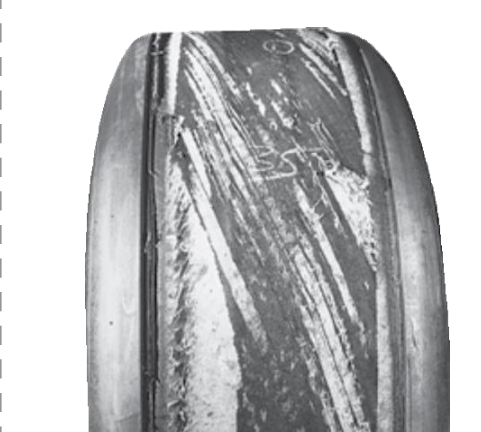
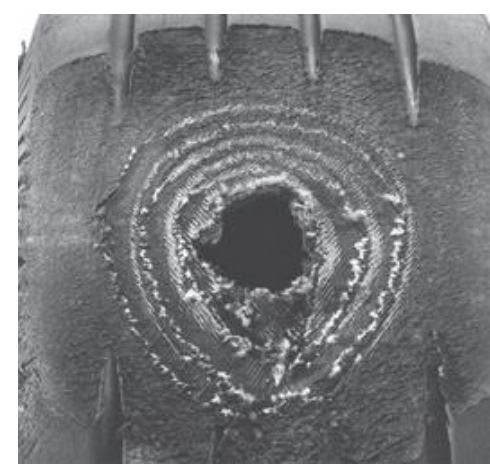
Without anti-skid, when braking torque exceeds the available friction the wheel stops turning while the aircraft keeps moving. A single point of the tread drags in the same place and is quickly abraded down to the cords.
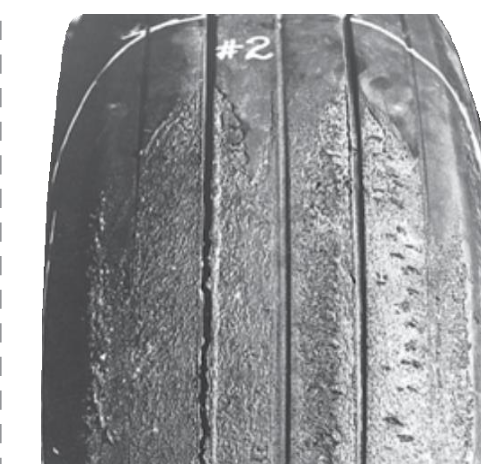
On a wet runway, the locked wheel generates so much heat that it melts the rubber at the contact patch and traps steam. The steam lifts the tire — reverted rubber (steam) aquaplaning.
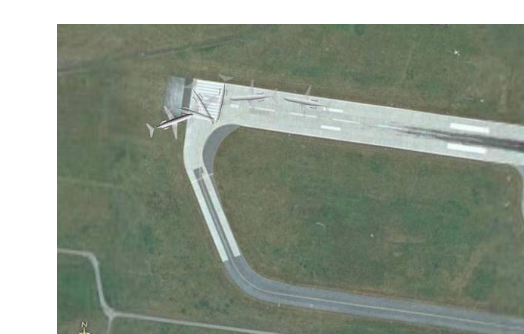
Approach through a thunderstorm; landing on a wet runway 28 with an increased speed. Braking did not stop the aircraft before the end of the runway; a runway excursion and a ~200° ground loop followed, with the main gear in the grass.
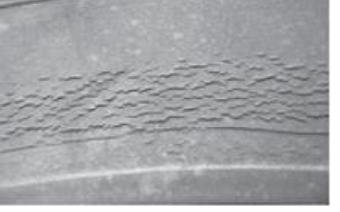
On the runway, light-colored, glossy braking marks with a glassy appearance and a large amount of detached rubber were found — the classic signature of reverted rubber aquaplaning.

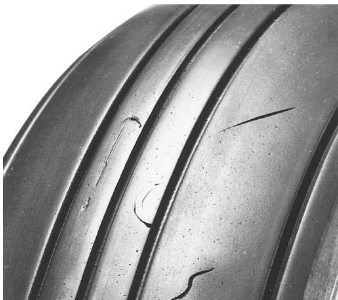
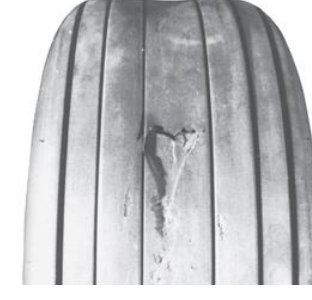
Penetration of the tread by a foreign object (FOD) on a runway or apron.
Remove if cords are exposed
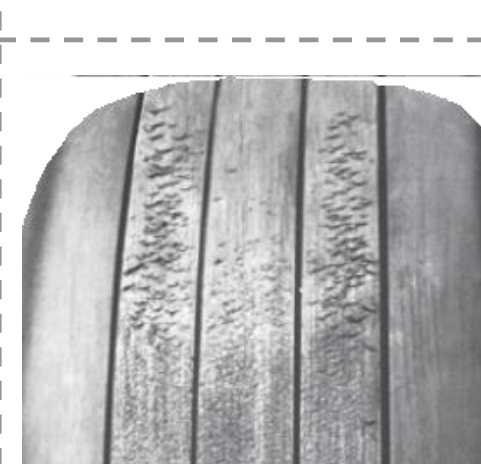
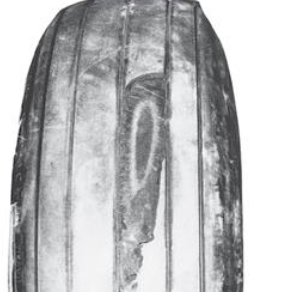
Loss of pieces from the tread surface on rough runways.
Remove if cords are visible
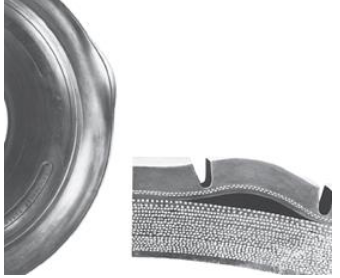
Detachment of the tread from the carcass — overload or overheating.
Remove immediately
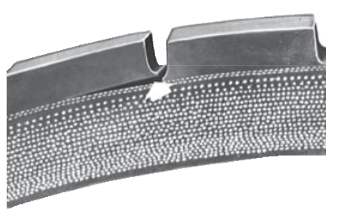
A groove crack extending beneath a rib; leads to chunking or thrown tread.
Remove immediately
Starts from a cut and develops into circumferential detachment of a rib.
Remove immediately
Shallow, random sidewall cracks from ozone, sunlight, and poor storage.
Remove if cords are visible